If you are searching for a polygraph examiner in Los Angeles, you have probably noticed how different the options look. Some advertise a rock-bottom price. Some promise results in minutes. Some say little about who will actually sit across from you.
A polygraph can only be as useful as the person administering it. The examiner builds the questions, runs a validated technique, reads the charts, and explains what the results do and do not mean. So the choice of examiner matters more than almost any other decision you make.
Here are seven questions to ask before you book a lie detector test in Los Angeles, whoever you choose.
1. Can I verify your credentials?
Ask which professional associations the examiner belongs to, and ask for links you can check yourself. Look for membership in the American Polygraph Association (APA), the California Association of Polygraph Examiners (CAPE), and the American Association of Police Polygraphists (AAPP). Examiners who test post-conviction cases should also hold PCSOT qualification.
Be precise about the wording. The APA sets standards and accredits training programs, but it does not certify individual examiners. An honest examiner will say "member," not claim a certification that doesn't exist.
At Global Polygraph & Security, every association Oded Gelfer belongs to is linked on his About page so you can confirm it in a minute.
2. How much experience do you have, and where did you train?
Years in the field matter, but so does the kind of experience. Ask where the examiner went to polygraph school, how long ago, and how many exams they have administered.
Oded Gelfer graduated from the Israeli Government Polygraph School in 2004. He spent nearly 30 years in government intelligence service and has administered more than 4,000 exams in English, Arabic, and Hebrew.
3. What technique do you use, and how are the questions built?
A professional exam is not a surprise interrogation. Before any sensors are attached, a good examiner holds a pre-test interview, explains how the instrument works, and reviews every question with you word for word.
Ask how many relevant questions a single test includes. Validated techniques limit each test to a small number of pertinent questions, no more than four in our practice, so the result stays clear and interpretable. If an examiner plans a long list of questions in one sitting, ask why.
You can read the full sequence on our test procedure page.
4. What equipment do you use, and who scores the charts?
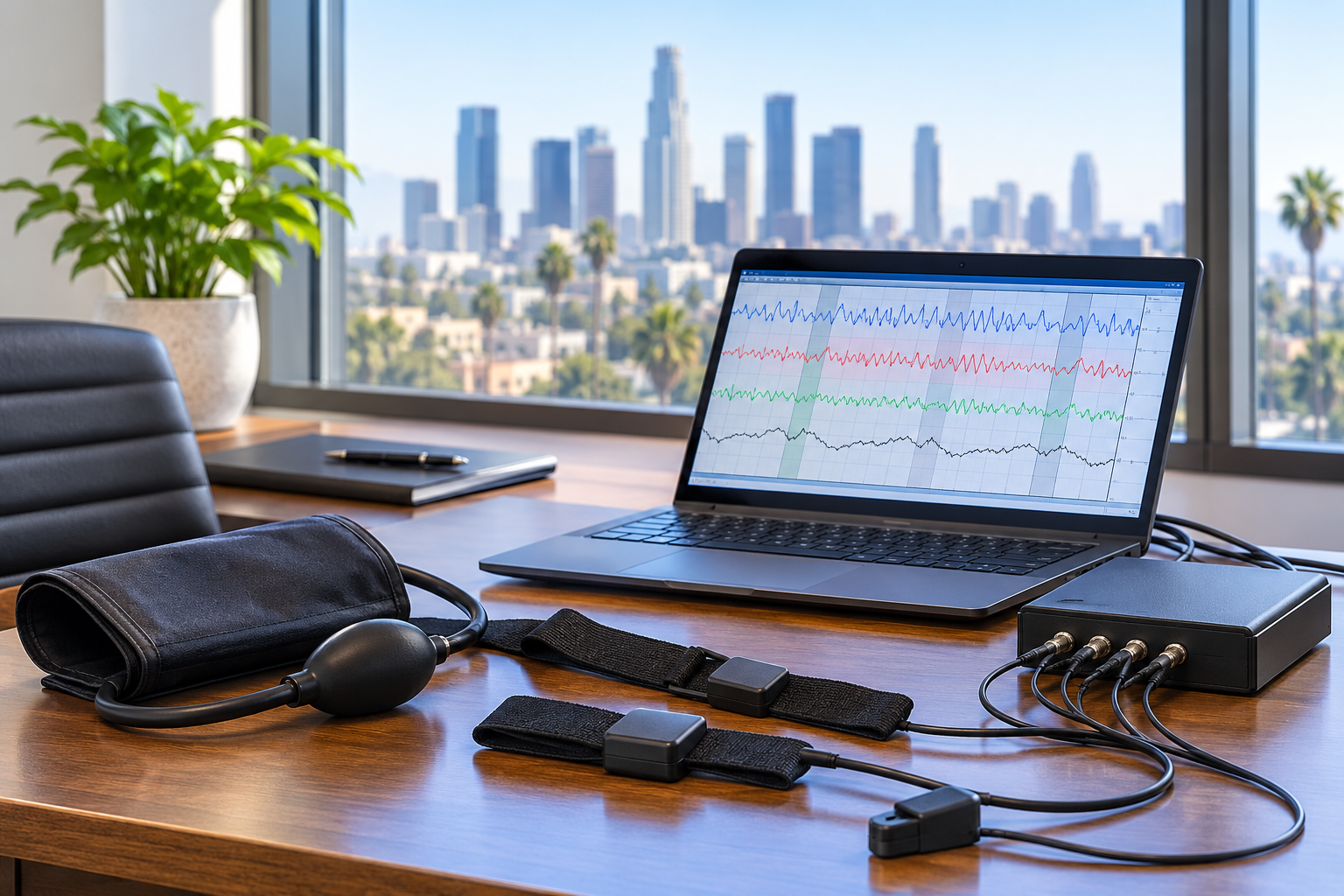
Modern examinations use computerized instruments that record several physiological channels. More important than the brand is who interprets the data. The charts should be analyzed by a trained examiner, not by software alone and not by a third party who never met you.
5. How do you protect my privacy?
Polygraph testing is often tied to sensitive matters: a relationship, a legal issue, an immigration case, a workplace concern. Ask where the exam takes place, who will be in the room, who receives the results, and whether anything is shared without your written permission.
Our exams are by appointment only in a private Century City office. Walk-ins are not accepted, so no one waits in a lobby alongside other clients.
6. What exactly is included, and is the full cost clear up front?
This is the question that separates professionals from bait-and-switch operations. Ask what the fee covers: the pre-test interview, the number of charts, the post-test discussion, and any written report. Ask whether anything is charged extra, and get the answer before you travel to the appointment.
Be cautious of unusually low advertised offers that later add fees, and of any examiner who guarantees a particular outcome. No honest examiner can promise how a test will come out. We cover warning signs in more detail on our polygraph scam alert page.
We are happy to walk you through exactly what a complete exam includes during your free, confidential consultation.
7. Are you the right fit for my kind of case, and my language?
A relationship test, a legal-case test, an immigration-related test, and a workplace test each involve different considerations. Ask whether the examiner regularly handles your type of matter, and whether they can conduct the exam in your first language without an interpreter.
Global Polygraph & Security conducts tests in English, Hebrew, and Arabic. Learn more about our infidelity and relationship testing, immigration polygraph, and employment testing services.
A note on honesty
Ask any examiner to talk plainly about limits. Polygraph results are generally not admissible in court unless both sides agree, and the scientific community continues to debate accuracy. Honest examiners acknowledge that false positives and false negatives can occur and explain how they work to reduce them. If an examiner dismisses those concerns, treat that as a warning sign. For background on the scientific debate, see the National Academies' review, The Polygraph and Lie Detection, and the American Polygraph Association.
Quick checklist before you book
Credentials you can verify yourself
Training location and number of exams administered
A pre-test interview and all questions reviewed beforehand
Trained examiner interprets the charts
Clear privacy terms and a private office
Everything included, explained before you arrive
Experience with your type of case, in your language
Talk to a Los Angeles polygraph examiner
Choosing the right examiner is the most important step. If you would like to ask these questions of us, we welcome it. Call 424-302-2498 or schedule a free, confidential consultation. We serve Century City, Beverly Hills, West Hollywood, Santa Monica, and the greater Los Angeles area.