
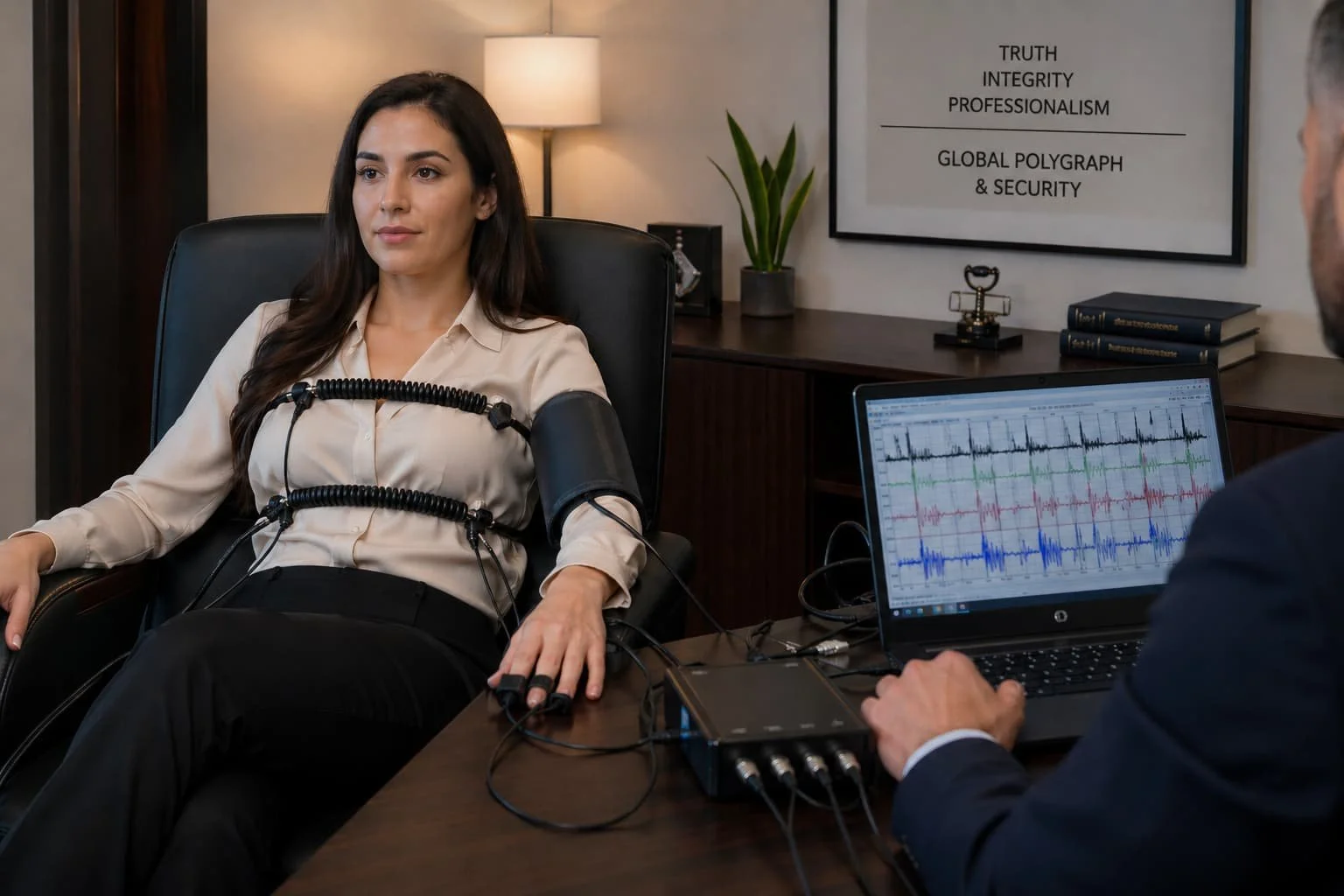
If you've scheduled a polygraph examination — or you're thinking about it — you probably have one big question: What do I do to be ready?
As a certified polygraph examiner with over 30 years of experience and more than 4,000 examinations conducted in Los Angeles and beyond, I've seen how preparation affects results. Here's exactly what you should know before you walk in the door.
Get a good night's sleep
Fatigue affects your physiological responses — heart rate, blood pressure, breathing patterns. These are the very signals the polygraph measures. A tired, anxious body can produce inconsistent readings that complicate the analysis. Aim for 7–8 hours the night before your test.
Avoid alcohol and recreational drugs
Do not consume alcohol or any non-prescribed substances in the 24 hours before your exam. These alter your body's baseline physiological state and can interfere with the accuracy of your results. Disclose any prescription medications during the pre-test interview — certain medications can affect the test and your examiner needs to account for them.
Eat a light meal beforehand
Don't come to your exam on an empty stomach. Low blood sugar can increase anxiety and affect your physical responses. Equally, don't eat a heavy meal right before — you want to feel calm and comfortable, not sluggish.
Arrive on time — not early, not late
Give yourself enough time to arrive without rushing. A stress spike from sitting in traffic or searching for parking right before your exam is avoidable. At Global Polygraph & Security, our Beverly Hills-area office is designed to be easily accessible. If you have any doubt about location or parking, call us the day before.
Be honest during the pre-test interview
This is perhaps the most important piece of advice. The pre-test interview isn't a trap — it's your opportunity to work with the examiner to build the best, most accurate test for your specific situation. Every question will be reviewed and agreed upon with you before the test begins. There are no surprise questions.
If you have a medical condition, are taking medications, or feel particularly anxious, say so. A professional examiner like our APA-certified team will factor all of this in.
Understand what the test can and can't measure
A polygraph measures physiological responses to specific, factual yes/no questions. It cannot measure emotions, opinions, or intentions — only specific actions. Knowing this helps you walk in with realistic expectations and a calm mindset.
Don't try to "beat" the test
Attempting countermeasures — controlled breathing tricks, biting your tongue, mental exercises — is almost always detected by an experienced examiner and typically results in a finding of purposely non-cooperative (PNC), which is treated as a failed exam. If you're telling the truth, the best strategy is simply to relax and answer honestly.
What to bring
A valid photo ID
A list of any prescription medications you're currently taking
Any specific information relevant to the questions you want tested (dates, names, context)
Ready to schedule your exam?
At Global Polygraph & Security, every examination is conducted with complete confidentiality, state-of-the-art equipment, and over 30 years of certified experience. We serve Beverly Hills, Hollywood, Glendale, Pasadena, Long Beach, Orange County, and all of Greater Los Angeles.