
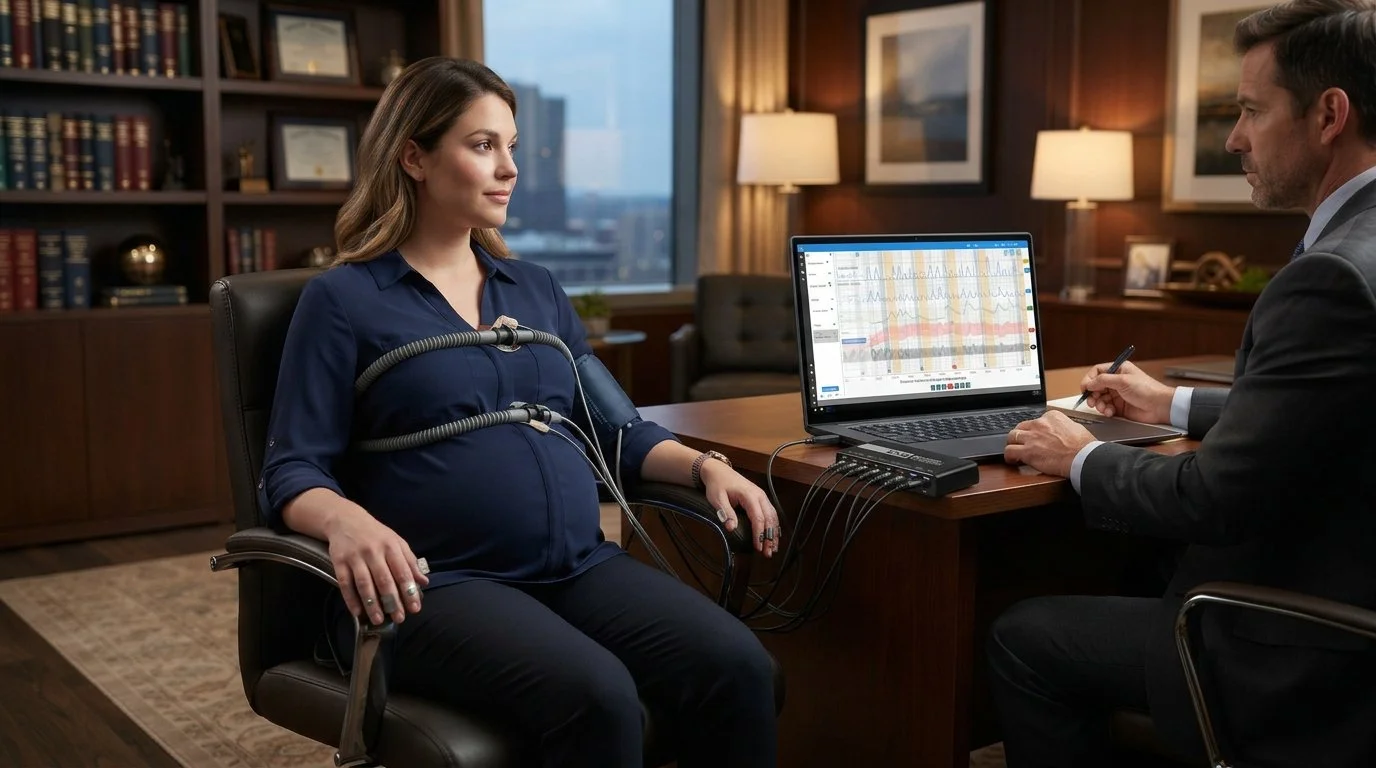
Short answer: sometimes, and it starts with your doctor. If you are pregnant and need a polygraph test in Los Angeles, whether for a legal matter, an immigration case or a personal situation, the first step is written approval from your physician.
Pregnancy changes how your body behaves, and a polygraph measures exactly that. At Global Polygraph & Security in Century City, we do not schedule a pregnant client until her physician has weighed in. This guide explains why, how stress during pregnancy is taken into account, and how results are handled.
Why pregnancy matters for a polygraph
A polygraph records your breathing, your heart rate and blood pressure, and the activity of the sweat glands in your skin. Pregnancy affects all three. Blood volume increases, your resting heart rate typically rises, your breathing pattern shifts as the uterus grows, and many women feel warmer and perspire more.
These changes are normal and healthy. But they alter the baseline an examiner compares your responses against, so they have to be considered carefully.
Step one: your physician's written approval
The American Polygraph Association's model policy on examinee suitability advises examiners to defer to medical professionals when an examinee is known to be pregnant, and says an examiner may require a statement or waiver from a physician. We follow that approach.
We ask for a short written note from your OB-GYN, midwife or primary physician confirming that you may take part in a polygraph appointment. Your physician knows your history and is the right person to decide. They may consider:
how far along you are
how long you will be seated (the full appointment, including interviews, typically takes two to three hours)
the blood pressure cuff used during the exam
any pregnancy complications or medications
If your physician says no, or recommends waiting, we respect that. You can reschedule whenever it is safe.
Stress and anxiety during pregnancy
Pregnancy can bring worry, fatigue, nausea, disrupted sleep and mood changes. A polygraph is also stressful in itself, especially when the stakes are personal or legal. A well-structured exam is designed to account for ordinary nervousness, but pregnancy adds physical and emotional factors on top.
That is why we:
ask about your due date, symptoms, sleep and medications during the pre-test interview
explain every step and review every question with you before any sensor is attached
schedule your appointment at a time of day when you feel your best, and reschedule if you are unwell on the day
remind you that a polygraph is voluntary and you may stop at any time
You can read more about the process on our test procedure page.
How results are handled during pregnancy
Because pregnancy changes your baseline, results are reviewed with that in mind, and the pregnancy is noted in your written report. If the charts are inconclusive or cannot be interpreted with confidence, we will tell you plainly rather than force a conclusion. In some cases we may recommend retesting after you have delivered and recovered. Timing decisions are made together with your physician's guidance.
Pregnancy does not automatically cause a failed result. The real risk is a less clear chart, which is why physician approval, careful preparation and honest reporting matter so much. See how we explain results.
When it may be better to wait
If your matter is not urgent, many people choose to wait until after delivery, when their body has returned to its usual baseline. If you are facing a deadline, such as an immigration filing or a legal case, talk to your attorney first, then call us. We will discuss your options, including your physician's input.
What to expect, step by step
Call for a free, confidential consultation. Tell us your due date and what you need the test for.
Ask your physician for a written note approving your participation.
Share the note with us before we confirm an appointment.
Choose a time. We offer flexible evening and weekend appointments by request.
Pre-test interview. We review your health, your comfort and every question.
The exam. Sensors are applied with care and the exam is paced to your comfort.
Results review. We go through the outcome with you and provide a written report.
Frequently asked questions
Is a polygraph dangerous during pregnancy? The sensors are non-invasive, but only your physician can say whether the exam is appropriate for you. That is why we ask for written approval first.
Can my employer make me take a polygraph while I am pregnant? Federal law (the Employee Polygraph Protection Act) generally restricts private employers from requiring polygraph tests, with limited exceptions. If you feel pressured, speak with an employment attorney.
Will pregnancy make me fail? Not automatically. The concern is a less clear chart, which can lead to an inconclusive result. That is why we document the pregnancy and may recommend retesting later.
Do you test in languages other than English? Yes. Global Polygraph & Security tests in English, Hebrew and Arabic.
This article is general information, not medical or legal advice. Follow your physician's guidance.
Pregnant and need a polygraph in Los Angeles?
Call 424-302-2498 or schedule a free, confidential consultation. Our certified examiner, Oded Gelfer (APA member since 2007, CAPE, AAPP and PCSOT), will walk you through your options at our Century City office, next to Beverly Hills.